Vatican Catacombs: What People Actually Mean (and How to Visit Each)
Search for “Vatican catacombs” and you land in a tangle of three different places with three different booking systems. Strictly speaking, the Vatican has no catacombs at all — here is what actually lies under St. Peter's, what the real catacombs are, and how to get into each one.
- Three sites, three booking systems — untangled
- Grottoes: included with basilica entry
- Scavi tour: request months ahead
- Real catacombs: bookable this week from €15
Live availability · Tiqets
Strictly speaking, the Vatican has no catacombs
A catacomb is an underground cemetery of tunnelled galleries — kilometres of narrow corridors lined with tombs. Nothing under Vatican City matches that. When people search for the Vatican catacombs, they mean one of three distinct places:
- The Vatican Grottoes — the crypt level directly under St. Peter's Basilica, holding the tombs of many popes. Included with basilica access.
- The Vatican Necropolis (Scavi) — a genuine ancient Roman cemetery one level deeper, with what the Church identifies as St. Peter's tomb. Tiny groups, advance request only.
- Rome's real catacombs — San Callisto and its neighbours on the Appian Way: actual tunnels, frescoes and the Crypt of the Popes. This is the underground experience most searchers picture.
Each has its own access rules, and mixing them up costs people real visits — most painfully with the Scavi tour, which cannot be booked on the spot. Here is each one in detail.
Vatican Grottoes: the papal crypt under St. Peter's
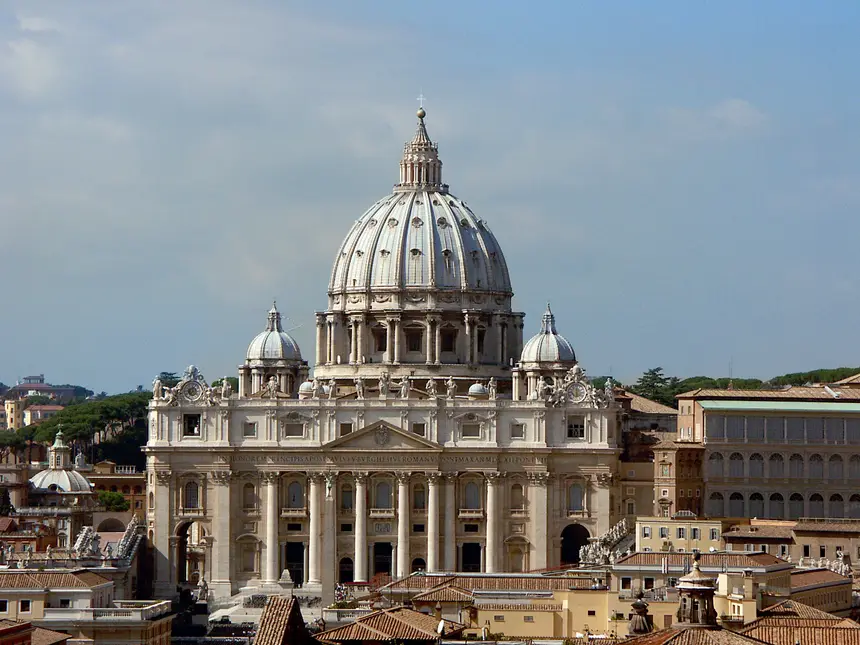
The grottoes occupy the space between the floor of today's basilica and the floor of the original 4th-century basilica built under Constantine. They are a church crypt, not ancient tunnels: broad marble corridors, side chapels, and the tombs of many popes — Pius XII, Paul VI, John Paul I and Benedict XVI among them.
John Paul II lay here too, from 2005 until 2011, when his tomb was moved upstairs into the basilica's Chapel of St. Sebastian after his beatification. Pilgrims looking for him in the grottoes are a decade out of date.
Access is the easy part: the entrance is inside the basilica, and the grottoes are included with basilica entry — no separate ticket exists. Your only obstacle is the security queue on St. Peter's Square. If you expect winding candle-lit passages, adjust now: this is a bright, orderly crypt you walk through in 15–20 minutes.
Option 2 · One level deeperVatican Necropolis: the Scavi tour under the grottoes
Below the grottoes lies something far older: a Roman cemetery of the 1st–4th centuries, in use before Constantine levelled the area for his basilica. Excavated in the 1940s, this necropolis is a street of pagan and early Christian mausoleums, ending at the spot the Church identifies as the tomb of St. Peter — the reason the basilica stands where it does.
This is the hardest ticket in Rome. The Scavi tour runs in small groups of about a dozen, with a minimum age of 15, and can only be requested in advance through the Ufficio Scavi — the Excavations Office of the Fabbrica di San Pietro. You write to them with your dates, group size and language, and wait for a confirmation.
Booking reality check: the Scavi tour is not sold on Tiqets, GetYourGuide, Viator or any regular ticket platform. Any site offering instant “Vatican Necropolis tickets” is selling something else. Request months ahead through the Ufficio Scavi, and treat a confirmed slot as a small victory.
The real “Vatican catacombs” are on the Appian Way
The image in most searchers' heads — narrow tunnels cut through soft rock, tombs stacked in the walls, faded frescoes in the lamplight — exists, just not at the Vatican. Rome's catacombs line the roads outside the ancient walls, and the largest complex open to visitors is San Callisto on the Via Appia Antica, about 4 km from the centre.
The Vatican link is real, only inverted: San Callisto's Crypt of the Popes held nine 3rd-century popes and was nicknamed “the little Vatican” by its discoverer. So the popes' oldest burial chamber is in a catacomb — the catacomb just isn't under the Vatican.
Practically, this is also the easiest of the three to visit: guided tours in five languages leave roughly every half hour, daily except Wednesday, bookable online from €15. Formats and languages are compared on the guided tours page.
Grottoes vs Scavi vs San Callisto
The three sites people call the catacombs under St. Peter's, compared on what matters for planning.
| Vatican Grottoes | Vatican Necropolis (Scavi) | Catacombs of San Callisto | |
|---|---|---|---|
| What it is | Crypt under St. Peter's with tombs of many popes | Ancient Roman cemetery with St. Peter's tomb | Real catacomb: 20 km of galleries, frescoes, Crypt of the Popes |
| How to book | No booking — included with basilica access | Written request to the Ufficio Scavi, well in advance | Online from €15, or €10 at the door |
| Time needed | 15–20 min inside | About 90 min tour | 40–50 min tour; 1.5–2 h door to door |
| Getting in | Easy — just the basilica security queue | Hard — scarce slots, small groups, minimum age 15 | Easy — book days ahead; closed Wednesdays |
Which should you choose?
Match the site to what you actually want out of the visit.
- You want papal tombs with zero planning → the Vatican Grottoes. Walk into St. Peter's, take the stairs down, done.
- You want to stand at St. Peter's tomb and can book months out → the Scavi tour. Write to the Ufficio Scavi as soon as your dates are fixed.
- You want the underground-tunnels-and-frescoes experience this week → San Callisto. Tours from €15 in five languages, daily except Wednesday — start with the tickets page.
Still weighing San Callisto against Domitilla, San Sebastiano or Priscilla? The which-catacombs comparison settles that in five minutes.
Frequently Asked Questions
Does the Vatican have catacombs?
Can you visit the tombs under St. Peter’s?
How do I book the Scavi (Vatican Necropolis) tour?
Are the Vatican Grottoes free to visit?
What is the difference between the Vatican Grottoes and the Vatican Necropolis?
Is John Paul II buried in the Vatican Grottoes?
Where are Rome’s real catacombs?
Skip the Vatican catacombs confusion — book the real ones
The tunnels, the frescoes and the Crypt of the Popes are waiting on the Appian Way. Guided tours in five languages, most options with free cancellation.
Book the San Callisto guided tour · from €15