Catacombs of San Callisto in Photos: Frescoes & Interior
Cameras stay in your bag underground, so these Catacombs of San Callisto photos are the closest you will get to a preview: the 3rd-century frescoes, the Crypt of the Popes, and the grounds above — everything you will see on the tour, gathered from archival and freely licensed sources.
- Photography prohibited inside — see it here first
- Original frescoes, still in situ
- All images archival or freely licensed
- Guided tour included in every ticket
Live availability · Tiqets
Why real Catacombs of San Callisto photos are so rare
Search for interior shots and you find the same handful of archival plates — because for decades, nobody has been allowed to take new ones.
The rule is simple and absolute: no photography or filming anywhere underground. Not with flash off, not on a phone, not "just one quick shot" — guides ask for cameras to stay away for the full 40–50 minutes, and they mean it. Large bags and tripods should not come down either.
The reason is conservation, not secrecy. The frescoes are around 1,800 years old, painted on thin plaster in tunnels where humidity is permanently high. Repeated bursts of flash accelerate pigment decay, and in corridors barely wide enough for single file, a group stopping to frame shots would gridlock the route for everyone behind. Rather than argue about camera settings tomb by tomb, the Pontificia Commissione di Archeologia Sacra — the Vatican body that manages the site — bans it outright.
Above ground it is a different story: the entrance avenue, gardens and the surrounding Appia Antica park can be photographed freely, and they are genuinely scenic. So treat this page as your camera roll for the underground part, and save your own shots for the surface.
Practical tip: phones go in pockets, not hands — you will want both free anyway on the uneven stairs. Everything below is what your eyes, not your lens, will collect. How the visit works is covered on the guided tours page.
San Callisto frescoes: the painted crypts
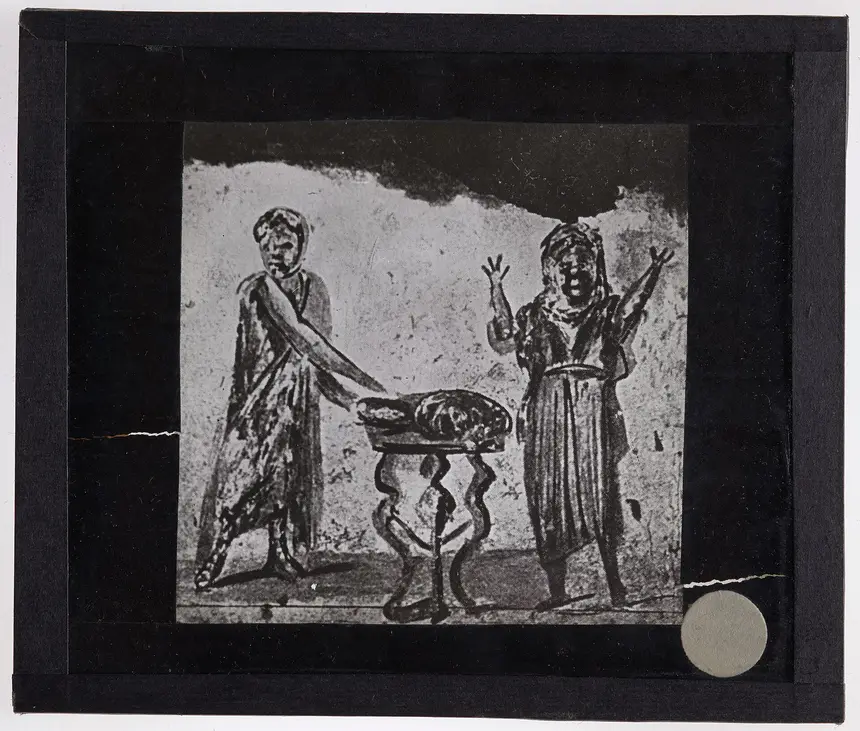
The oldest surviving gallery of Christian art anywhere. These 3rd-century paintings decorate the Cubicles of the Sacraments and the Crypts of Lucina, and every one is still on the wall or ceiling where it was painted.
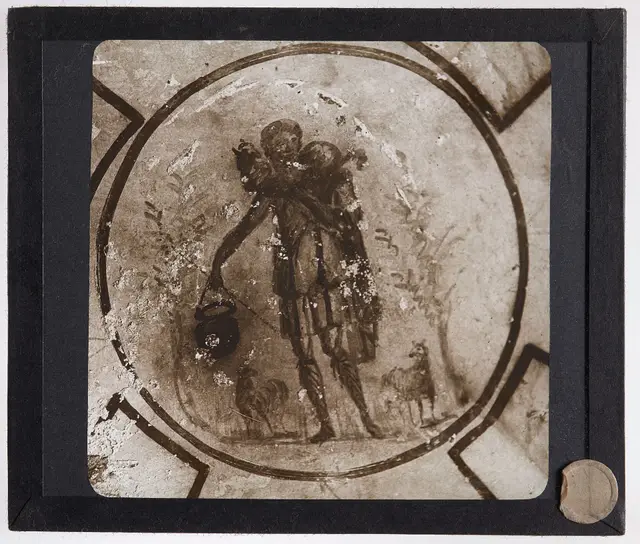
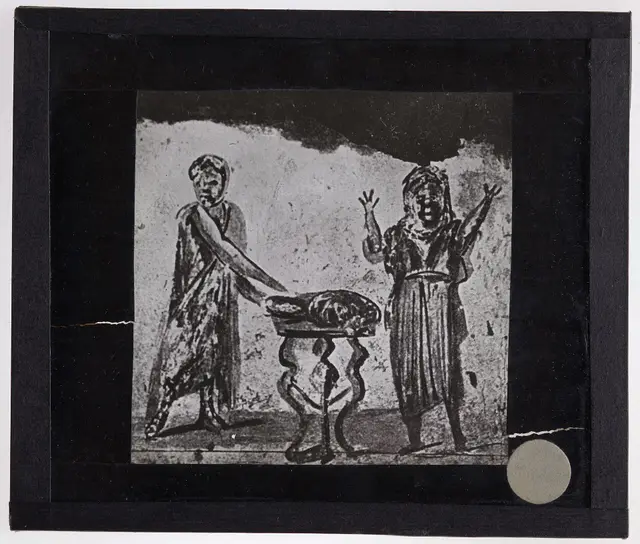
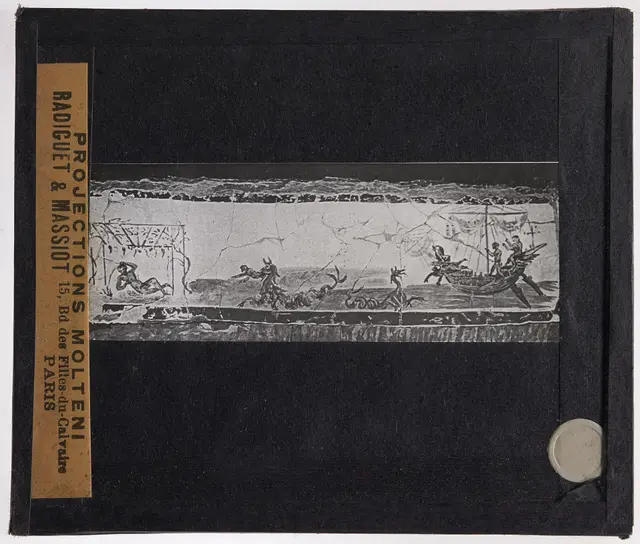
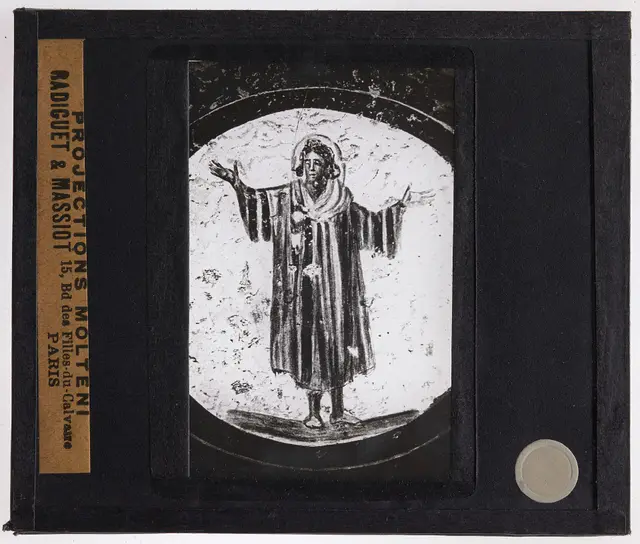
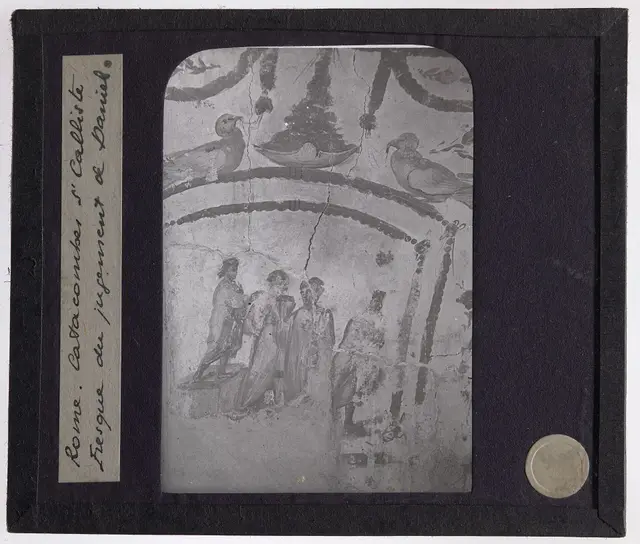
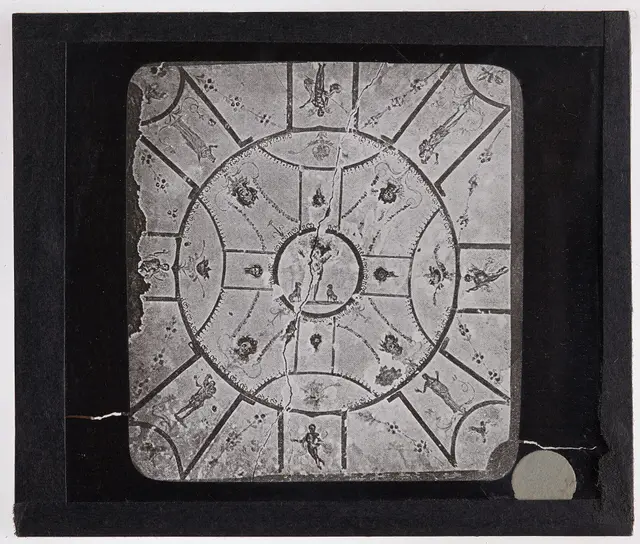
Expect faded elegance rather than Sistine Chapel colour. Centuries of humidity, early pilgrims' oil lamps and 19th-century souvenir hunters have worn the surfaces, so the figures read as soft ochres, rusty reds and greens on pale plaster. Outlines are quick and confident — these were workshop painters decorating tombs, not court artists — and that economy is exactly what makes them feel alive. The fish, anchor, dove and Good Shepherd repeat like a code; decode them beforehand with our guide to early Christian symbols and the dim walls turn into a readable story.
What it actually looks like down there
Photos flatten the experience; here is what they miss. You descend a modern staircase and the temperature drops to a steady ~16 °C — cool enough that a light layer is welcome in August. The corridors are cut straight into tufa, the soft volcanic rock under Rome, and the walls still carry the pick marks of the fossores, the professional diggers.
Both sides of every corridor are stacked floor to ceiling with loculi — rectangular burial niches, most now open and empty, some small enough to make you stop: children's graves. Wider chambers open off the passages, a few with arcosolium arch-tombs and traces of paint. Lighting is deliberately low and warm; the darkness beyond each junction is genuinely black.
The scale never fully registers underground, which is probably for the best. You walk a guided loop of roughly one level; the network keeps going around and beneath you.
The crypts: nine popes and St. Cecilia
The emotional centre of the visit. The Crypt of the Popes — the "little Vatican" — held nine 3rd-century popes, and the chamber next door belonged to St. Cecilia, patron saint of music.
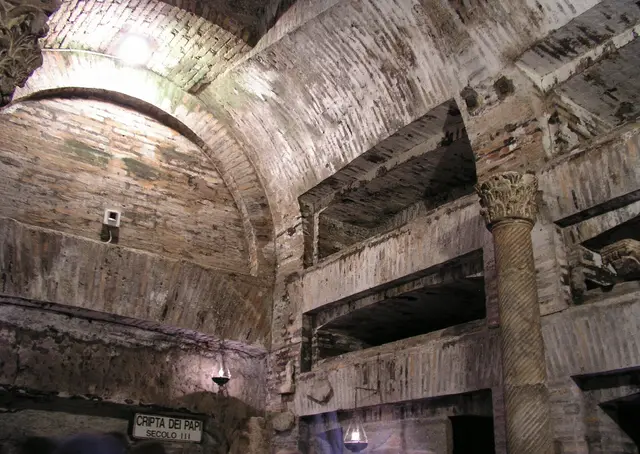
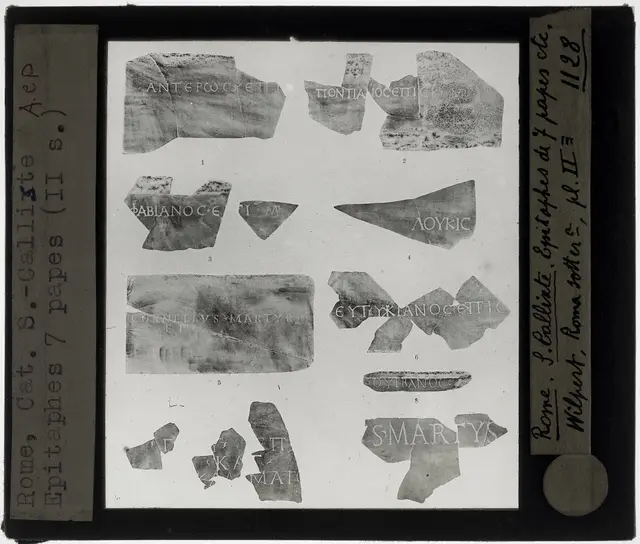
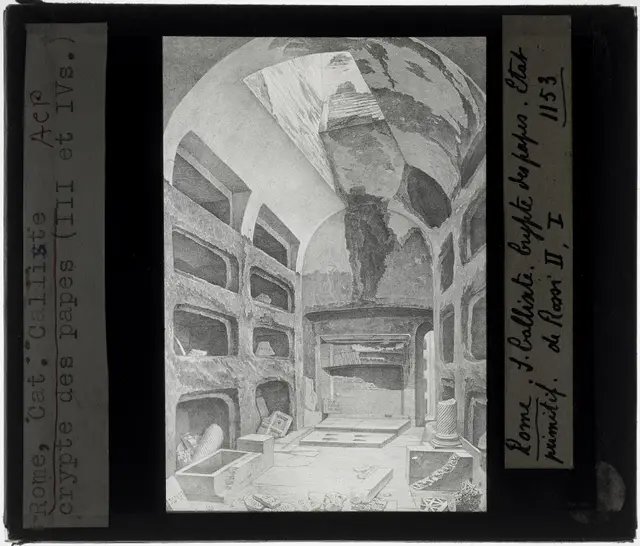
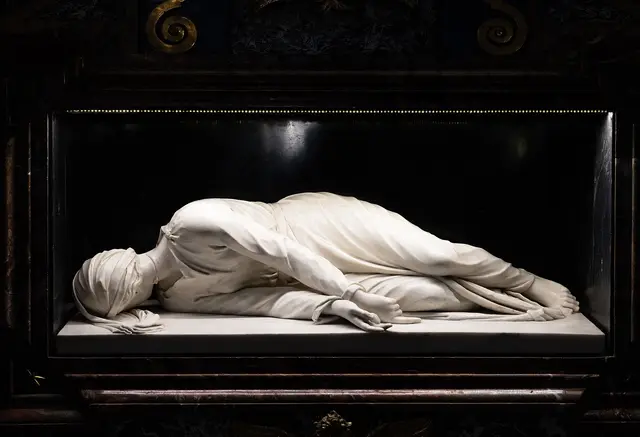
In person the crypt is smaller and quieter than the illustration suggests — a marble-clad room where your group suddenly stops talking. Cecilia's chamber holds the reclining sculpture, her face turned away, exactly as Maderno claimed her body was found; the original saint was moved to Santa Cecilia in Trastevere in 821. The full story is on the Crypt of the Popes page.
Above ground: where your camera is welcome
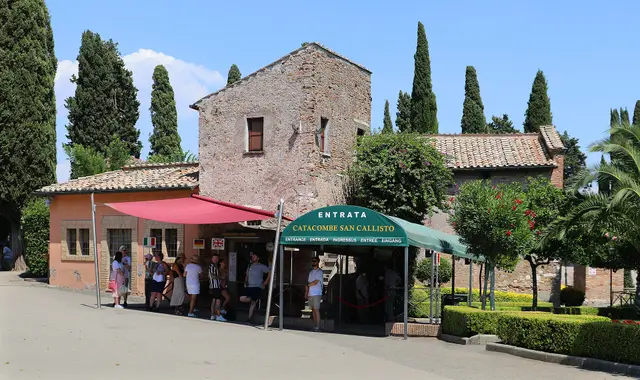
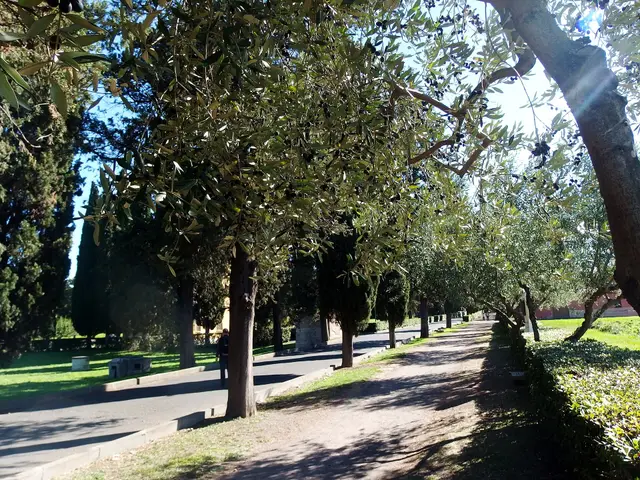
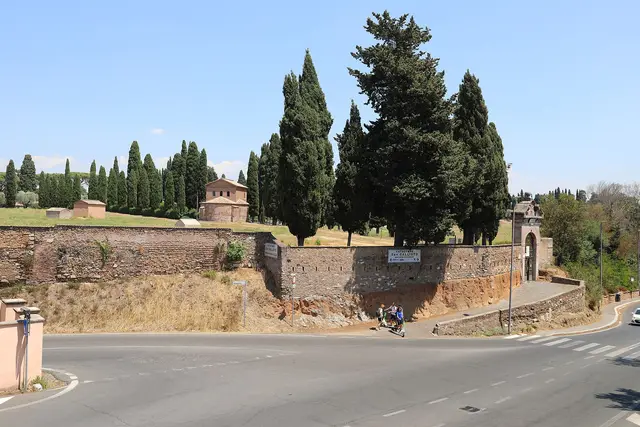
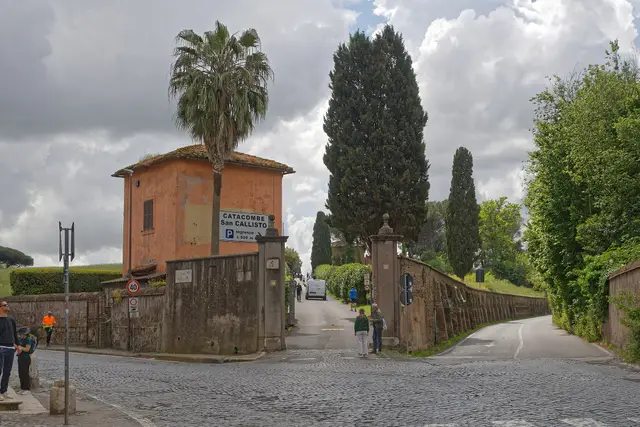
The surface is a green pocket of the Appia Antica park — pines, cypresses and long avenues. Shoot freely here.
What you can and can't shoot
- Allowed: the entrance avenue, gardens, exterior buildings and the whole Appia Antica park around the site.
- Allowed: the basalt paving of the ancient Appian Way, a short walk from the gate.
- Not allowed: anything underground — corridors, loculi, crypts, frescoes. No photos, no video, no exceptions.
- Not allowed: flash anywhere inside, tripods and bulky bags below ground.
- Grey area, ask first: the interior of the entrance building and shop.
Image credits
All images on this page are archival photographs or freely licensed works from Wikimedia Commons; none were taken in violation of the interior photo ban.
- fresco-good-shepherd.jpg — Unknown — Public domain — Wikimedia Commons
- fresco-eucharist.jpg — Unknown — Public domain — Wikimedia Commons
- fresco-jonah.jpg — Unknown — Public domain — Wikimedia Commons
- fresco-orante.jpg — Unknown — Public domain — Wikimedia Commons
- fresco-daniel.jpg — Unknown — Public domain — Wikimedia Commons
- lucina-ceiling.jpg — Unknown — Public domain — Wikimedia Commons
- crypt-of-popes.jpg — Dnalor 01 — CC BY-SA 3.0 — Wikimedia Commons
- epitaphs-popes.jpg — Unknown author — Public domain — Wikimedia Commons
- crypt-popes-illustration.jpg — Unknown author — Public domain — Wikimedia Commons
- cecilia-maderno.jpg — Jacek Durski — CC BY-SA 4.0 — Wikimedia Commons
- entrance-avenue.jpg — Sailko — CC BY 3.0 — Wikimedia Commons
- entrance-building.jpg — Palickap — CC BY-SA 4.0 — Wikimedia Commons
- grounds-cypress.jpg — Sailko — CC BY 3.0 — Wikimedia Commons
- complex-grounds.jpg — Raboe001 — CC BY-SA 3.0 — Wikimedia Commons
Frequently Asked Questions
Can you take photos inside the Catacombs of San Callisto?
Why is photography banned in the catacombs?
Are the frescoes you see on the tour originals?
Is it dark inside the catacombs?
Can I buy photo books or postcards at San Callisto?
Where can I take good photos near the catacombs?
Photos of the Catacombs of San Callisto only go so far
The cool air, the black side tunnels, the hush in the Crypt of the Popes — none of it fits in a frame. Book a slot in your language and see the frescoes where they were painted.
Book the guided tour · from €15